

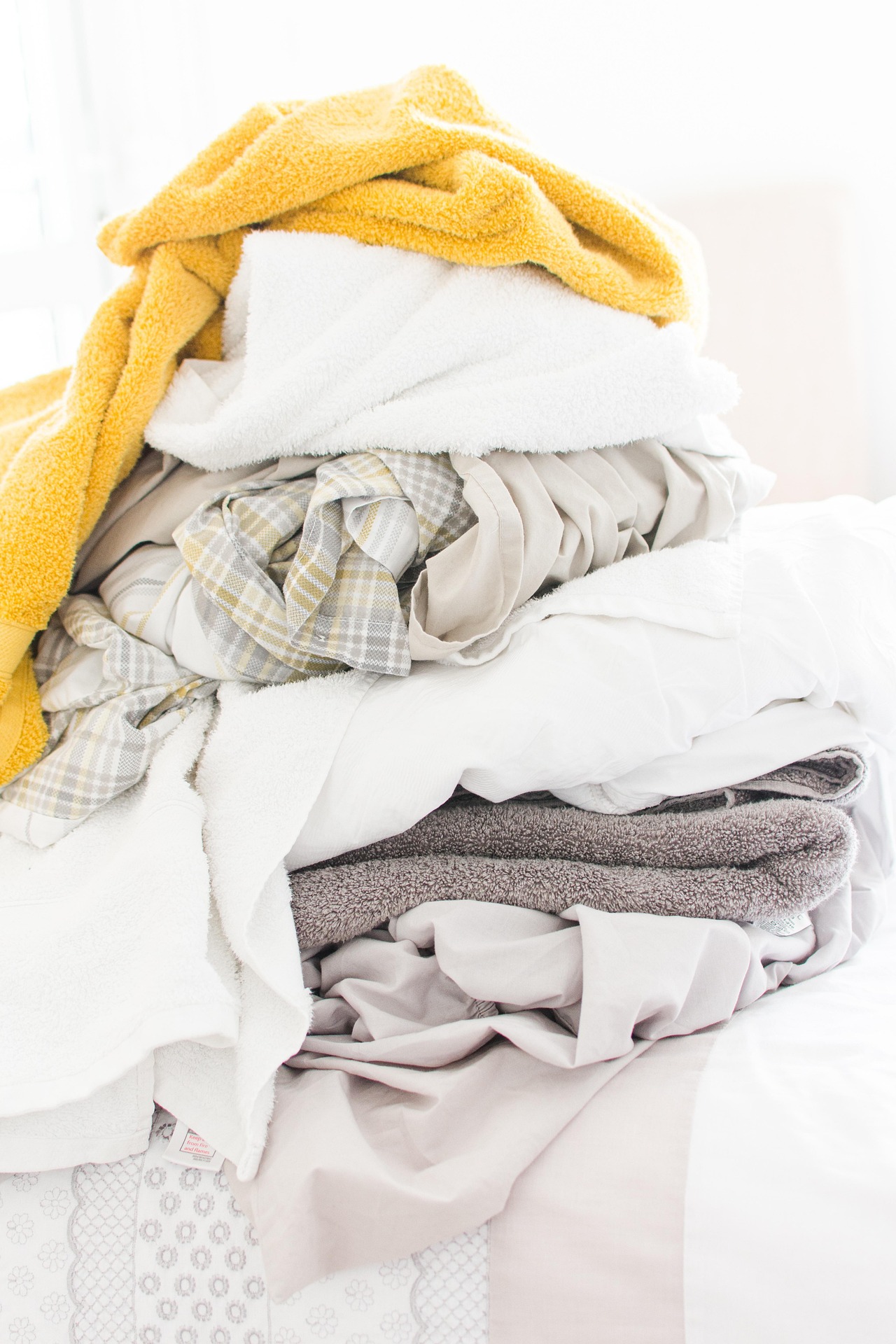
Massage oil and fluffy towels are a lovely combination right up until laundry day.
The towel comes out of the wash looking clean. You fold it, put it away and forget about it. A few days later you open the cupboard and catch that unmistakable smell of old oil. Wash it again and the smell improves, but the towel now feels stiff enough to exfoliate a garden wall.
Oil does not rinse away as easily as sweat or ordinary dirt. It settles into the fibres and a quick wash can leave enough behind for the towel to smell stale later. Adding more detergent often makes matters worse because the machine may not rinse it all out.
The best approach is to deal with the oil before it has time to sit.
Wash Oily Towels Promptly
Do not leave used massage towels in a closed basket for several days. Warm, damp fabric gives the oil plenty of time to work its way into the fibres.
If you cannot run a wash immediately, hang the towels somewhere ventilated until you can. Leaving them in a heap is about the worst option. The smell becomes harder to shift and can transfer to everything else in the basket.
Keep heavily oiled towels separate from clothes and ordinary bath towels too. There is no sense turning one oily towel into an entire load of them.
Start With a Small Amount of Washing-Up Liquid
For obvious oil patches, put a small amount of plain washing-up liquid directly onto the affected area before washing. It is designed to break down grease and usually works better on a fresh mark than throwing extra laundry detergent into the machine.
Rub it gently into the fabric with your fingers and leave it for around 15 minutes. You do not need to scrub the towel aggressively. That can roughen the fibres without doing much more to remove the oil.
Use washing-up liquid sparingly. Too much creates excessive foam in a washing machine and leaves you with another problem to sort out.
If the towel is coloured, test any treatment on a hidden corner first.
Use the Warmest Safe Wash
Check the care label and use the warmest temperature the towel can safely tolerate. Heat helps lift oil, but there is no benefit in ignoring the label and shrinking or damaging the fabric.
Most robust cotton towels can cope with a warm wash. Delicate fabrics and strongly coloured towels may need more care.
Use a normal amount of good laundry detergent. Filling the drawer to the top will not make the towel cleaner. Detergent residue can remain in the pile and leave towels feeling coated, flat or strangely crunchy.
An extra rinse is often more useful than extra detergent.
Skip the Fabric Softener
Fabric softener makes towels smell pleasant for a while, which can disguise the fact that the oil has not been removed. It also coats the fibres and gradually reduces absorbency.
That is not ideal for any towel and it is particularly unhelpful for one used during massage. You want the fabric to absorb moisture and excess product rather than move it around the skin.
If your towels have already developed a heavy coating, wash them again without softener and select an extra rinse. It may take more than one wash before they feel normal.
Check Before Using the Tumble Dryer
Do not put an oily towel straight into a hot dryer and hope for the best. Check it after washing.
If it still feels greasy or smells strongly of oil, wash it again. Heat can set lingering smells and some oil-contaminated fabrics can present a fire risk when exposed to high dryer temperatures.
When in doubt, air-dry the towel fully after rewashing it. Do not leave oily laundry crumpled while it is warm.
Once the towel is clean, use a moderate dryer setting or follow the care label. Drying towels on extreme heat every time can make them coarse and shorten their life.
What About Baking Soda and White Vinegar?
Both are endlessly recommended for laundry. Neither needs to go into every wash.
Baking soda can help with a lingering stale smell, but it is not a replacement for detergent and proper oil treatment. White vinegar may help remove detergent residue during a separate rinse, although it should not be mixed directly with other cleaning products.
Never mix vinegar with chlorine bleach.
If the towel is still oily, deal with the oil first. Trying to cover the smell with fragrances, softener or a collection of cupboard ingredients only delays the next wash.
Some Massage Oils Are Easier on Towels
The amount of product matters. Pouring oil directly onto a towel almost guarantees a difficult wash, so keep bottles upright and away from the linen stack.
It also helps to use dedicated massage towels. Darker colours may hide marks better, although they do not hide stale oil smells. Plain cotton towels are generally easier to wash repeatedly than anything unusually delicate or heavily decorated.
If one particular oil keeps surviving the washing machine, look at the quantity being used and the product itself. A lighter application may be all that is needed.
When a Towel Cannot Be Rescued
A towel that still smells rancid after repeated treatment and washing may have reached the end of its useful spa life. Keeping it in the cupboard can pass the smell to otherwise clean linen.
Downgrade it to cleaning duty if it is safe to do so, or dispose of it. There comes a point when the water, detergent and effort cost more than the towel.
The simplest routine is usually the one that works: keep oily towels separate, wash them promptly, pre-treat visible marks, avoid fabric softener and check them before applying dryer heat.